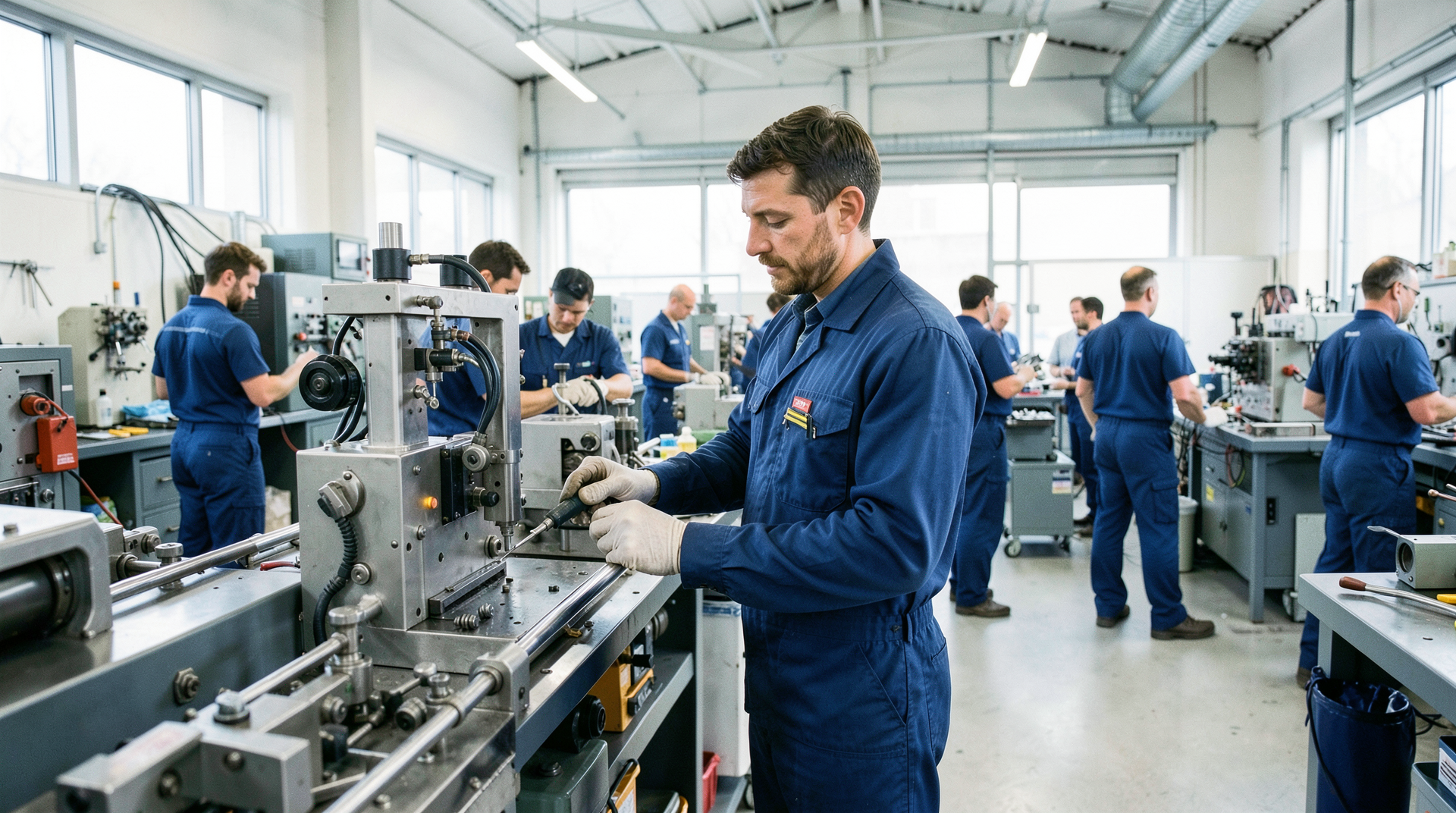
Germany offers significant opportunities for skilled technicians, including those currently based in the Gulf region. While demand exists across various sectors, securing a visa and a suitable role requires careful planning, qualification recognition, and a realistic understanding of the application process and job market.
This guide outlines the pathways available, real salary expectations, and how to navigate official channels for a successful transition.
At a Glance
- Typical salary: €35,000 – €60,000 per year
- Visa route: Skilled Worker Visa, Opportunity Card (Chancenkarte)
- Processing time: 3-6 months (visa), plus recognition process
- Top requirements: Recognized qualifications, German language proficiency, job offer or points for Opportunity Card

How the German Skilled Worker Visa and Opportunity Card Work
Germany’s immigration system for skilled workers primarily operates through two main pathways: the Skilled Worker Visa and the new Opportunity Card (Chancenkarte). Both aim to attract qualified professionals from outside the EU/EEA, including those from Gulf countries.
The Skilled Worker Visa typically requires a recognized qualification and a concrete job offer. This means you must have an employer willing to sponsor your visa application before you arrive in Germany.
The Opportunity Card, introduced in 2024, offers a new route for job seekers. It allows individuals to come to Germany for up to a year to find employment, provided they meet a points-based system criteria.
Qualification Recognition is Key
A crucial step for many non-EU qualifications is official recognition in Germany. This process, known as Anerkennung, ensures that your vocational training or university degree is considered equivalent to a German qualification.
Without recognition, it can be challenging to secure a Skilled Worker Visa or even be considered for many technical roles. The process can take several months and involves submitting detailed documentation of your education and work experience.
Processing Expectations and Costs
The overall timeline for moving to Germany can be extensive. Qualification recognition alone can take from 3 to 6 months, sometimes longer depending on the complexity of your case and the responsible authority.
Visa processing times at German embassies or consulates typically range from 6 weeks to 3 months after all documents are submitted. Expedited procedures may be available in some cases, but these are not guaranteed.
Visa application fees are approximately €75. Additionally, you will incur costs for document translation, certification, and potentially fees associated with the qualification recognition process, which can vary widely but may range from €200 to over €600.
Realistic Salaries for Technicians in Germany
Salaries for technicians in Germany vary significantly based on industry, location, experience, and specific qualifications. Generally, roles in manufacturing, automotive, and IT sectors tend to offer competitive remuneration.
It’s important to research average salaries for your specific trade and region. Cost of living also differs across Germany, with larger cities often having higher salaries but also higher expenses.
| Role / Experience Level | Approximate Annual Gross Salary Range |
|---|---|
| Entry-Level Technician (0-2 years experience) | €32,000 – €40,000 |
| Mid-Level Technician (3-7 years experience) | €40,000 – €50,000 |
| Senior / Specialist Technician (8+ years experience) | €50,000 – €65,000+ |
| Mechatronics Technician | €38,000 – €55,000 |
| Industrial Electrician | €35,000 – €52,000 |
These figures are gross salaries, meaning before taxes and social security contributions. Net income will be considerably lower, typically around 60-70% of the gross amount, depending on your tax class and deductions.
Key Requirements for German Skilled Worker Visa and Opportunity Card
While specific requirements can vary, the core elements for both pathways are similar. It is essential to prepare your documentation thoroughly.
For the Skilled Worker Visa:
- Recognized Qualification: Your vocational training or university degree must be recognized as equivalent to a German qualification. You can check this through the Anabin database or apply for a statement of comparability.
- Job Offer: A valid employment contract from a German employer for a job appropriate to your qualifications. The Federal Employment Agency (Bundesagentur für Arbeit) may need to approve the job offer in some cases.
- German Language Proficiency: While not always a strict legal requirement for the visa itself if the job does not demand it, most technical roles and daily life in Germany will require at least a B1 or B2 level of German.
- Financial Stability: Proof of sufficient funds to cover your living expenses in Germany until your first salary, or a declaration of commitment from your employer.
- Health Insurance: Valid health insurance coverage for your stay in Germany.
For the Opportunity Card (Chancenkarte):
The Opportunity Card is based on a points system, requiring a minimum of 6 points. Points are awarded for:
- Full Recognition of a Foreign Qualification: 4 points. Partial recognition or a university degree/vocational training in a regulated profession also awards points.
- German Language Skills: Up to 3 points (e.g., C1 = 3 points, B2 = 2 points, B1 = 1 point).
- English Language Skills: Up to 1 point (C1 = 1 point).
- Professional Experience: Up to 3 points (e.g., 5 years in the last 7 = 3 points, 3 years in the last 5 = 2 points).
- Age: Up to 2 points (e.g., under 35 = 2 points, 35-40 = 1 point).
- Connection to Germany: 1 point (e.g., previous legal stay of at least 6 months).
- Accompanying Partner: If your spouse also meets the criteria for an Opportunity Card, you can get an additional point.
You must also demonstrate financial means to support yourself for the duration of your job search (currently around €1,027 per month). The Opportunity Card allows you to work part-time for up to 20 hours per week or undertake trial employment during your search.
Finding Legitimate Roles via Official Channels
Identifying genuine job opportunities is critical to avoid scams. Always prioritize official government portals and well-established job boards.
Official German Job Portals
The primary official source for job listings in Germany is the Job Search portal of the Federal Employment Agency (Bundesagentur für Arbeit). This portal lists vacancies across all sectors and is a trusted resource.
Many German companies also list directly on their own career pages. It’s advisable to check company websites of specific employers you are interested in.
Mainstream Job Boards
Reputable international and German job boards are also excellent resources. These include:
- Indeed Germany (de.indeed.com): A widely used platform with a vast number of listings.
- StepStone (stepstone.de): One of Germany’s largest online job portals, particularly strong for professional roles.
- Monster Germany (monster.de): Another popular international job board with a strong presence in Germany.
- LinkedIn: Useful for networking and finding professional roles, often with direct links to company career pages.
When searching, use German terms for your profession (e.g., Industriemechaniker for industrial mechanic, Elektroniker for electrician). Be cautious of any job offer that seems too good to be true or asks for upfront payments.
For those interested in opportunities in other countries, similar official channels apply, such as Canada’s Job Bank for roles like caregiver jobs in Canada or the UK’s register of licensed sponsors for roles like UK truck driver jobs with visa sponsorship.
Step-by-Step Application Process
Navigating the German immigration process requires patience and attention to detail. Here’s a general outline:
1. Qualification Recognition (Anerkennung)
Start by researching if your qualification requires recognition. Visit the ‘Recognition in Germany’ portal (www.anerkennung-in-deutschland.de) for detailed information and to find the responsible authority for your profession.
Gather all necessary documents: diplomas, transcripts, training certificates, work experience letters. Have them officially translated into German by a sworn translator and certified.
2. Job Search or Opportunity Card Application
For Skilled Worker Visa: Begin your job search using the official channels mentioned above. Tailor your CV and cover letter to German standards. Attend interviews (often online initially).
For Opportunity Card: Calculate your points based on the criteria. Prepare proof of qualifications, language skills, and financial means. Apply for the Opportunity Card at the German embassy/consulate in your country of residence.
3. Visa Application
Once you have a job offer (for Skilled Worker Visa) or the Opportunity Card approval, gather all required visa documents. This typically includes your passport, visa application form, two biometric passport photos, employment contract (if applicable), qualification recognition statement, proof of financial means, and health insurance.
Book an appointment at the German embassy or consulate in your current country of residence. Appointments can have long waiting times, so plan ahead.
Attend your visa interview, submit all documents, and pay the visa fee. Be prepared to answer questions about your intentions and qualifications.
4. Arrival in Germany and Registration
Upon arrival, you will need to register your address with the local residents’ registration office (Einwohnermeldeamt) within two weeks. You will also need to apply for a residence permit (Aufenthaltserlaubnis) at the local Foreigners’ Office (Ausländerbehörde).
If you arrived on an Opportunity Card, this is when you intensify your job search. If you arrived on a Skilled Worker Visa, you can begin work as per your contract.
Frequently Asked Questions
What is the difference between the Skilled Worker Visa and the Opportunity Card?
The Skilled Worker Visa requires you to have a job offer and recognized qualifications before you apply for the visa. The Opportunity Card allows you to come to Germany for up to a year to search for a job, based on a points system, without a prior job offer.
Do I need to speak German to work as a technician?
While some international companies might operate in English, for most technical roles, especially those involving client interaction or safety protocols, a good command of German (at least B1 or B2 level) is highly beneficial and often required by employers. It is also crucial for daily life and integration.
Can my family join me in Germany?
Yes, under both the Skilled Worker Visa and the Opportunity Card, family reunification is generally possible. Spouses and minor children can apply for their own visas to join you, provided you can demonstrate sufficient living space and financial means to support them.
How long does the qualification recognition process take?
The recognition process can take anywhere from 3 to 6 months, sometimes longer if additional documents or an adaptation period are required. It is advisable to start this process well in advance of your visa application.
What is the minimum salary requirement for a Skilled Worker Visa?
For most skilled worker visas, there is no strict minimum salary threshold if your qualification is recognized and the Federal Employment Agency approves the job. However, for certain highly qualified professionals (like the EU Blue Card), higher salary thresholds apply. For the Opportunity Card, you must show sufficient funds to cover your living expenses during your job search.
Warning: How to Spot Job Scams
Unfortunately, job and visa scams are prevalent. It is crucial to remain vigilant and only deal with official sources. Legitimate opportunities will never ask you for money to secure a job or visa.
- Upfront “Visa Fees” or “Processing Fees”: A legitimate employer or government agency will never ask you to pay a fee directly to them for visa processing, job application, or sponsorship. Visa application fees are paid directly to the embassy/consulate.
- Guaranteed Jobs/Visas: No one can guarantee you a job or a visa. The decision rests with the employer and the German immigration authorities. Be extremely wary of any service making such promises.
- Unsolicited Offers via WhatsApp/Telegram: Scammers often use messaging apps to send fake job offers. Legitimate employers will typically contact you via official email or phone after you have applied through their official channels.
- Fake Recruiters: Verify the legitimacy of any recruitment agency. Check their website, contact details, and ensure they are registered if required in their operating country. Cross-reference job listings with official company career pages.
- Requests for Personal Banking Details: Never share sensitive banking information beyond what is required for legitimate payroll setup after you have officially started employment.
Remember, legitimate employers bear the costs associated with sponsoring a foreign worker, such as advertising and administrative fees. They will never ask you, the candidate, to pay for your sponsorship.
Conclusion
Germany offers a robust job market for skilled technicians, particularly with the introduction of the Opportunity Card. However, the process demands thorough preparation, including qualification recognition and often German language acquisition.
While demand is high in many sectors, competition for roles is real, and timelines for visa and recognition processes can be long. By focusing on official channels and preparing diligently, Gulf-based technicians can realistically pursue a career in Germany.
You May Also Like
- Canada Healthcare Worker Migration From the UAE and Saudi Arabia: Real Pathways and Registration
- UK NHS Nursing Jobs With Visa Sponsorship: A Guide for Gulf-Based Nurses
- Canada Farm Jobs With Visa Sponsorship: TFWP and SAWP Explained
- Fully Funded Scholarships Abroad 2026: Major Programs and How to Apply
- Poland Factory Jobs for Foreigners: Work Permits, Agencies and Real Wages