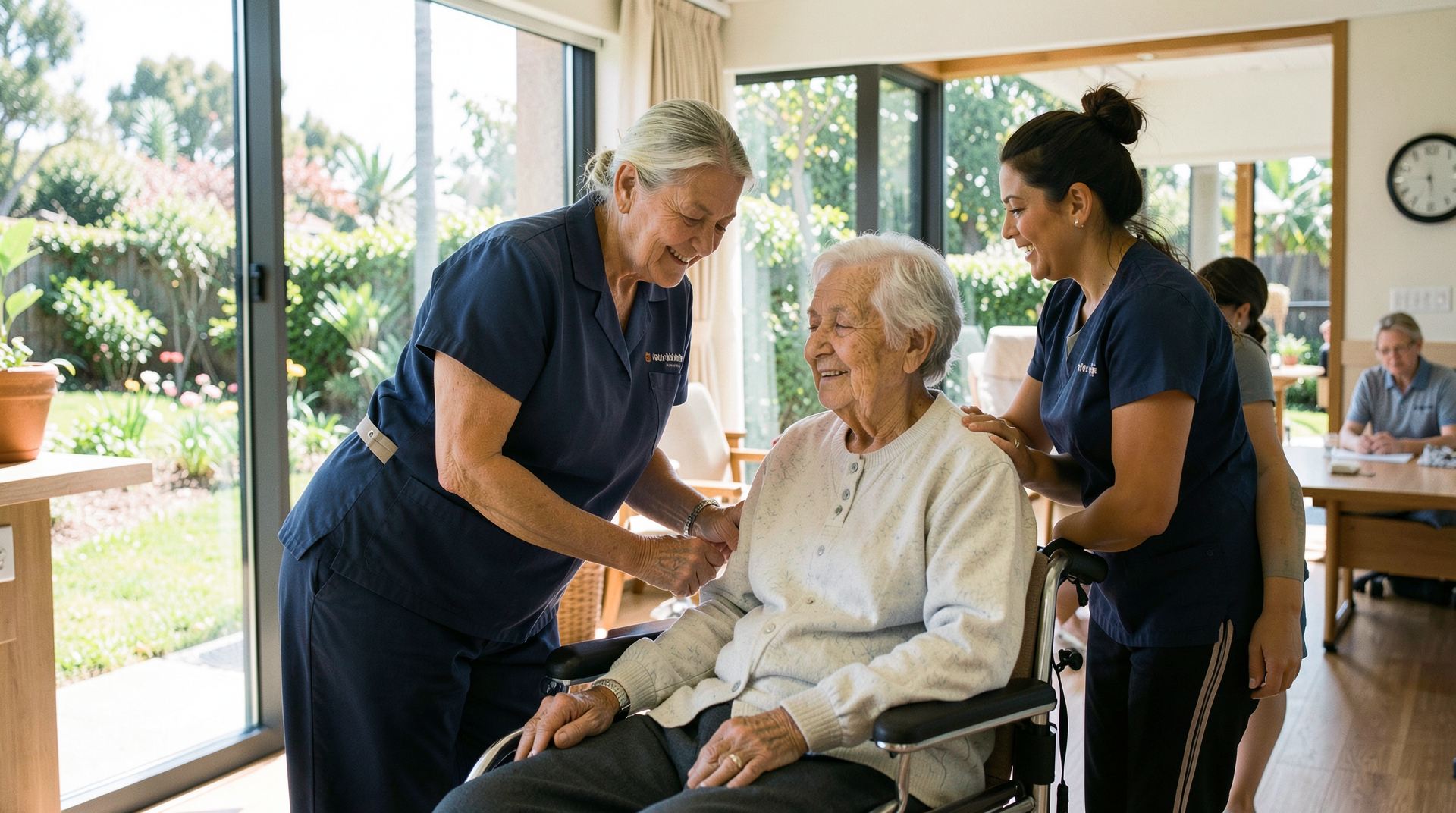
Australia offers opportunities for aged-care and healthcare professionals from Gulf countries through employer-sponsored visa pathways.
While demand is present, securing sponsorship requires meeting stringent eligibility criteria, including skills assessments and English language proficiency.
Competition for sponsored roles can be significant, and the process involves multiple steps with varying timelines.
At a Glance
- Typical salary: AUD $55,000 – $90,000 annually
- Visa route: Subclass 482 (TSS) or 186 (ENS)
- Processing time: 6 months to 2 years (highly variable)
- Top requirements: Skills assessment, English proficiency, employer sponsorship

How Employer-Sponsored Visas Work for Healthcare Professionals
Australia’s employer-sponsored visa programs facilitate the recruitment of skilled workers to address labor shortages.
For aged-care and healthcare roles, the most common pathways are the Temporary Skill Shortage (TSS) visa (subclass 482) and the Employer Nomination Scheme (ENS) visa (subclass 186).
The TSS visa is a temporary visa, typically valid for 2 to 4 years, which can sometimes lead to permanent residency.
The Temporary Skill Shortage (TSS) Visa (Subclass 482)
The TSS visa requires an eligible Australian employer to nominate a skilled overseas worker for a specific position.
The nominated occupation must be on the relevant skilled occupation list, such as the Medium and Long-term Strategic Skills List (MLTSSL) or the Short-term Skilled Occupation List (STSOL).
Many aged-care and healthcare roles, like Registered Nurses and Aged or Disabled Carers, are typically on these lists.
The Employer Nomination Scheme (ENS) Visa (Subclass 186)
The ENS visa is a permanent residency visa, often available in two streams: the Temporary Residence Transition stream and the Direct Entry stream.
The Temporary Residence Transition stream is for TSS visa holders who have worked for their nominating employer for a certain period, typically three years.
The Direct Entry stream is for applicants nominated by an employer who meet specific age, skills, and English language requirements without first holding a TSS visa.
Processing Expectations and Costs
Visa processing times can vary significantly based on the visa stream, applicant’s circumstances, and the Department of Home Affairs’ workload.
Applicants should anticipate processing times ranging from six months to two years for employer-sponsored visas.
Government visa application fees are substantial; for a TSS visa, the base fee is approximately AUD $1,455, and for an ENS visa, it is around AUD $4,640.
Additional costs include skills assessment fees, English language test fees, medical examinations, and police checks.
Realistic Salaries for Aged-Care and Healthcare Roles
Salaries in Australia for aged-care and healthcare professionals are competitive but vary based on experience, qualifications, location, and specific role.
These figures are general approximations and can fluctuate based on industrial awards and enterprise agreements.
| Role / Experience Level | Approximate Annual Salary Range (AUD) |
|---|---|
| Aged or Disabled Carer (Entry-Level) | $55,000 – $65,000 |
| Aged or Disabled Carer (Experienced) | $65,000 – $75,000 |
| Registered Nurse (Entry-Level) | $70,000 – $80,000 |
| Registered Nurse (Experienced) | $80,000 – $90,000+ |
| Personal Care Assistant (PCA) | $50,000 – $60,000 |
Key Requirements for Sponsorship
To be eligible for an employer-sponsored visa, applicants must meet several core requirements set by the Australian government and relevant assessing authorities.
These typically include qualifications, work experience, English language proficiency, and a satisfactory skills assessment.
Skills Assessment
A positive skills assessment from the relevant Australian assessing authority is mandatory for most skilled visa applications.
For Registered Nurses, the assessing body is the Australian Nursing and Midwifery Accreditation Council (ANMAC).
Aged or Disabled Carers may have their skills assessed by the Australian Community Workers Association (ACWA) or VETASSESS, depending on the specific occupation definition.
English Language Proficiency
All applicants must demonstrate a vocational or competent level of English, typically through an approved English language test.
Commonly accepted tests include IELTS, PTE Academic, TOEFL iBT, and OET.
The required scores vary by visa subclass and occupation; for example, Registered Nurses usually require higher scores.
General Requirements Overview:
- Qualifications: Relevant formal qualifications recognized in Australia (e.g., Bachelor of Nursing, Certificate III in Individual Support).
- Work Experience: Typically at least 2-3 years of relevant post-qualification work experience, though this can vary.
- Skills Assessment: A positive skills assessment from the designated Australian assessing authority.
- English Language: Demonstrated proficiency through an approved test (e.g., IELTS, PTE Academic) with minimum required scores.
- Health and Character: Meet Australia’s health and character requirements, including medical examinations and police checks.
- Employer Sponsorship: A valid nomination from an eligible Australian employer.
How to Find Legitimate Sponsored Roles
Finding legitimate employer-sponsored roles requires diligence and focusing on official and reputable channels.
Avoid any offers that seem too good to be true or ask for upfront payments for securing a job or visa.
Official Government Resources
The Department of Home Affairs website is the primary source for all visa information, including lists of eligible occupations and visa requirements.
While the Australian government does not directly list sponsored jobs, understanding the visa framework is crucial before seeking employment.
Mainstream Job Boards
Reputable mainstream job boards are the best place to search for legitimate sponsored positions.
Websites like Indeed Australia (au.indeed.com) and Seek (seek.com.au) are widely used by Australian employers.
When searching, use keywords such as “visa sponsorship,” “sponsored visa,” or “482 visa” in combination with your occupation (e.g., “aged care sponsorship”).
Employer Registers
Unlike some countries, Australia does not maintain a public register of approved sponsors in the same way the UK Home Office lists licensed sponsors.
However, you can often identify employers who have sponsored workers previously by observing job advertisements that explicitly mention sponsorship.
Step-by-Step Application Process
The application process for an employer-sponsored visa involves several distinct stages, each with its own requirements and timelines.
It is essential to complete each step accurately to avoid delays or refusal.
- Skills Assessment: Obtain a positive skills assessment from the relevant Australian assessing authority for your occupation. This is usually the first crucial step.
- English Language Test: Take an approved English language test (e.g., IELTS, PTE Academic) and achieve the required minimum scores.
- Job Search and Offer: Actively search for an eligible Australian employer willing to sponsor you. Secure a formal job offer and a nomination from this employer.
- Employer Nomination Application: Your prospective employer applies to the Department of Home Affairs to nominate your position.
- Visa Application: Once the nomination is approved or concurrently in some streams, you can lodge your visa application. This includes submitting all required documents, paying fees, and undertaking health and character checks.
- Visa Grant: If all requirements are met and checks are successful, your visa will be granted.

Frequently Asked Questions
Can I bring my family with me on an employer-sponsored visa?
Yes, most Australian employer-sponsored visas, including the TSS and ENS, allow eligible family members (spouse/de facto partner and dependent children) to be included in your application.
How long does the skills assessment process take?
The duration of a skills assessment varies depending on the assessing authority and the complexity of the application, typically ranging from 4 weeks to 6 months.
Do I need a job offer before I can apply for a skills assessment?
No, you generally do not need a job offer to apply for a skills assessment. In fact, obtaining a positive skills assessment is often a prerequisite for employers to consider sponsoring you.
Is prior experience in Australia required for sponsorship?
While prior Australian work experience is beneficial, it is not strictly required for all employer-sponsored visas. However, overseas experience must be relevant and demonstrable.
What if my occupation is not on the skills list?
If your occupation is not on the relevant skilled occupation lists for the TSS or ENS visa, you may not be eligible for these particular sponsorship pathways. It is crucial to check the most current lists on the Department of Home Affairs website.
Warning: How to Spot Job Scams
The high demand for skilled workers can attract fraudulent schemes. It is crucial to be vigilant and aware of common scam tactics.
Legitimate employers and visa processes will never ask you for money to secure a job offer or visa sponsorship.
Red Flags to Watch For:
- Upfront Fees: Any request for payment for a job application, interview, or a guaranteed visa is a scam. Legitimate employers pay sponsorship costs, not the candidate.
- Guaranteed Jobs/Visas: No recruiter or agent can guarantee a job or visa. The decision rests with the employer and the Department of Home Affairs.
- Unsolicited Offers: Be suspicious of job offers received out of the blue, especially if they are vague or contain grammatical errors.
- Unofficial Communication Channels: Legitimate communication will typically be via official company email addresses, not personal email, WhatsApp, or Telegram.
- Requests for Personal Financial Information: Never share bank account details, credit card numbers, or other sensitive financial information with unverified sources.
- Pressure Tactics: Scammers often try to rush you into making decisions or payments. Take your time to verify any offer.
Always verify the legitimacy of any employer or recruiter through official company websites and government registers.
For job searching, stick to reputable platforms like Seek or Indeed, and always cross-reference information with the official Department of Home Affairs website.
The opportunity to work in Australia’s aged-care and healthcare sectors from the Gulf region is genuine, driven by ongoing demand.
However, it is a competitive process requiring careful preparation, adherence to strict government guidelines, and patience with potentially long timelines.
By focusing on official channels and meeting all requirements, applicants can pursue this pathway responsibly.
You May Also Like
- Germany Skilled Worker Visa for Gulf-Based Technicians: Recognition, the Opportunity Card and Real Salaries
- Canada Healthcare Worker Migration From the UAE and Saudi Arabia: Real Pathways and Registration
- UK NHS Nursing Jobs With Visa Sponsorship: A Guide for Gulf-Based Nurses
- Canada Farm Jobs With Visa Sponsorship: TFWP and SAWP Explained
- Fully Funded Scholarships Abroad 2026: Major Programs and How to Apply