
Canada offers pathways for experienced caregivers to work and potentially gain permanent residency, addressing a significant demand for support in homes and facilities.
While opportunities exist, the process involves specific immigration programs, meeting strict criteria, and securing a legitimate job offer from an approved employer.
At a Glance
- Typical salary: CAD 18 – 25 per hour
- Visa route: Home Child Care Provider Pilot, Home Support Worker Pilot
- Processing time: 12-36 months (for permanent residency applications)
- Top requirements: Relevant work experience, language proficiency, Canadian education equivalency
Eligibility self-check
Quick self-check: could Canada’s caregiver pathways fit you?
This interactive self-check needs JavaScript. You can go straight to the official source instead: Canada.ca — IRCC caregiver pathways (official)
Job-hunting in South Africa right now? Many readers also apply to local employers hiring entry-level staff — see how to apply at Shoprite, Pick n Pay and The Courier Guy.
How Caregiver Immigration Programs Work in Canada
Canada’s primary immigration programs for caregivers are the Home Child Care Provider Pilot and the Home Support Worker Pilot. These are five-year pilot programs designed to provide caregivers with a pathway to permanent residence.
These programs allow caregivers to come to Canada on a temporary work permit, gain valuable work experience, and then apply for permanent residency once eligibility criteria are met.
Crucially, applicants must have a job offer from a Canadian employer or relevant work experience in Canada before applying for permanent residence under these pilots.
The Home Child Care Provider Pilot
This pilot is for caregivers who provide care for children in a private home. Your duties would typically include caring for children, assisting with their development, and maintaining a safe and healthy environment.
A legitimate job offer from a Canadian family is a foundational requirement to participate in this stream.
The Home Support Worker Pilot
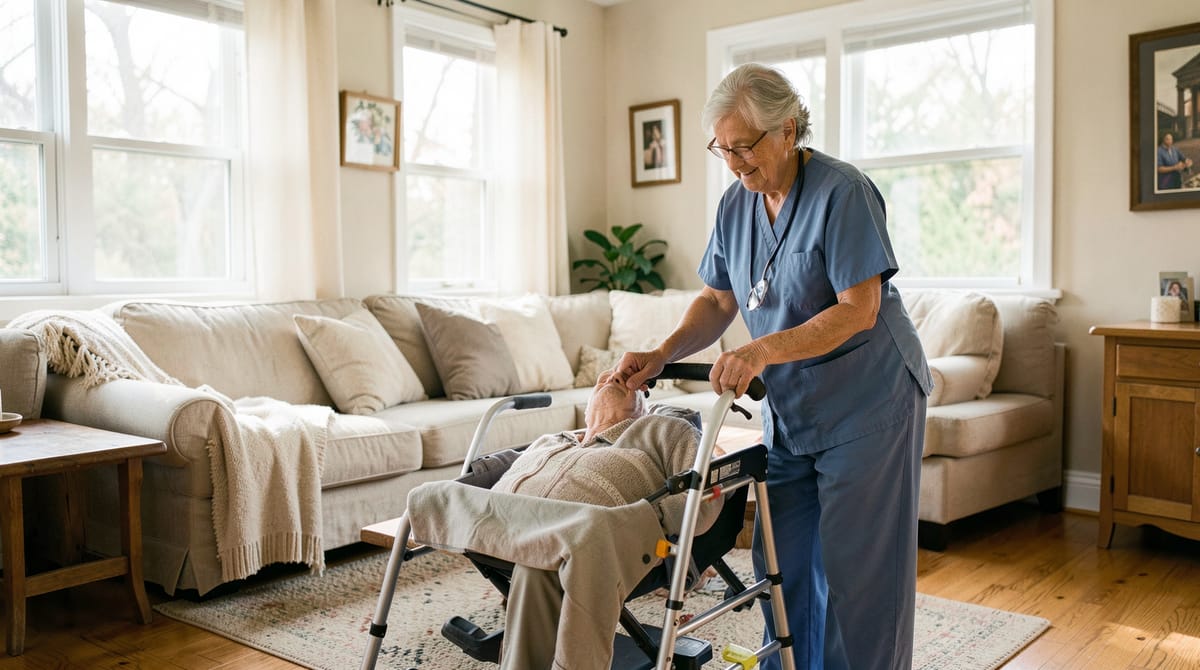
This pilot focuses on caregivers who provide care for individuals who require assistance due to age, illness, or disability. This often involves assisting with personal care, mobility, medication reminders, and general household tasks.
Again, a valid job offer from a Canadian employer is essential for this program stream.
Temporary Work Permits for Caregivers
Before applying for permanent residence through the pilots, many caregivers first secure a temporary work permit. This permit is often employer-specific, meaning you can only work for the employer who provided your job offer.
The processing times for these temporary work permits can vary significantly, typically ranging from a few weeks to several months depending on your country of application and current caseloads.
Costs associated with applying for a work permit include a processing fee of CAD 155 and a biometrics fee of CAD 85. There may also be costs for medical exams and police certificates.
Realistic Caregiver Salaries in Canada
Caregiver salaries in Canada vary based on location, experience, specific duties, and whether the role is live-in or live-out.
Employers must pay caregivers at least the provincial or territorial minimum wage, and often more. The median hourly wage for caregivers across Canada is roughly CAD 20-22 per hour.
It’s important to understand that while a live-in arrangement might offer lower housing costs, employers are legally required to deduct only certain amounts for room and board, as defined by provincial regulations.
| Role/Experience Level | Approximate Hourly Range (CAD) |
|---|---|
| Entry-Level Caregiver | 18 – 20 |
| Experienced Caregiver | 20 – 25 |
| Caregiver with Specialized Skills/Training | 24 – 28+ |
These figures represent gross pay, from which taxes, employment insurance, and Canada Pension Plan contributions will be deducted.
Related jobs you can apply for now
Key Requirements for Caregivers in Canada
To be eligible for Canada’s caregiver pilot programs, applicants must meet several stringent criteria.
These requirements ensure that caregivers are qualified and can successfully integrate into Canadian society and the workforce.
Education
You must have a Canadian post-secondary education credential of at least one year, or an equivalent foreign credential. If your credential is from outside Canada, you will need an Educational Credential Assessment (ECA) report.
The ECA report verifies that your foreign education is equivalent to a Canadian credential.
Language Proficiency
A good command of English or French is essential for caregiver roles. You must demonstrate language proficiency by taking an approved language test.
The minimum requirement is a Canadian Language Benchmark (CLB) level of 5 for all four abilities: reading, writing, listening, and speaking.
Work Experience
While you can apply for a work permit under these pilots without prior Canadian work experience, to be eligible for permanent residence, you will need to accumulate at least 24 months of full-time work experience in Canada within the last 36 months.
This experience must be in a qualifying occupation (NOC 44100 for Home Child Care Providers or NOC 44101 for Home Support Workers) and gained after receiving a positive Labour Market Impact Assessment (LMIA) exempt work permit or after arriving on an initial work permit under the pilot.
Job Offer
A genuine job offer from a Canadian employer is a critical component. The job offer must be for full-time employment (at least 30 hours per week) outside of Quebec, and it must be for one of the eligible caregiver occupations.
The employer must not be related to you by blood or marriage.
Admissibility
Like all immigrants to Canada, caregivers must be admissible. This means you must pass medical exams and security checks.
A criminal record or serious health condition could render you inadmissible.
Finding Legitimate Caregiver Roles and Employers
Finding a genuine job offer is the most crucial step. It is vital to use official and reputable channels to avoid potential scams.
Never rely on unofficial social media groups or individuals claiming to offer guaranteed jobs.
Job Bank Canada
Job Bank (jobbank.gc.ca) is the official job board of the Government of Canada. All employers who wish to hire foreign workers must post their jobs here.
You can filter searches by occupation (e.g., “home child care provider” or “home support worker”) and look for positions that explicitly mention supporting foreign workers or offering sponsorship.
Provincial Job Boards and Recruitment Agencies
Each Canadian province may have its own job boards or licensed recruitment agencies. Always verify that any agency is officially licensed in the province they operate in.
Reputable agencies will not charge you a fee for finding a job; their fees are paid by the employer.
Mainstream Job Boards
Websites like Indeed (ca.indeed.com) and Eluta.ca (eluta.ca) also list caregiver positions. When using these platforms, exercise caution and verify any potential employer.
Always cross-reference employer information with official business registries if possible.
For those interested in similar opportunities in other countries, information on pathways like the UK Care Worker Visa Route is also available.
Step-by-Step Application Process for Caregivers
The application process for caregivers seeking permanent residence in Canada typically involves several stages.
It requires careful attention to detail and adherence to all submission guidelines.
Step 1: Secure a Job Offer
Begin by searching for legitimate job offers from Canadian employers. Use official channels like Job Bank Canada.
Ensure the job offer meets the requirements of the caregiver pilot programs (full-time, eligible occupation, outside Quebec, non-family employer).
Step 2: Obtain an Educational Credential Assessment (ECA)
If your education is from outside Canada, apply for an ECA report from a designated organization (e.g., WES, ICAS). This report confirms your foreign credential’s Canadian equivalency.
This step can take several weeks or months, so plan accordingly.
Step 3: Complete Language Testing
Take an approved language test (IELTS General Training or CELPIP General for English; TEF Canada or TCF Canada for French). Aim to meet or exceed the CLB 5 requirement in all four abilities.
Results are typically valid for two years.
Step 4: Apply for a Work Permit (If Needed)
If you do not already have eligible Canadian work experience, you will apply for a work permit under the Home Child Care Provider Pilot or Home Support Worker Pilot. Your job offer will be critical at this stage.
This work permit is often employer-specific and allows you to gain the required Canadian work experience.
Step 5: Accumulate Canadian Work Experience
Once your work permit is approved and you arrive in Canada, you must work for at least 24 months full-time in your eligible caregiver occupation. This experience must be gained within 36 months.
Maintain accurate records of your employment, including pay stubs and letters of employment, as these will be needed for your permanent residence application.

Step 6: Apply for Permanent Residence
After acquiring the necessary 24 months of Canadian work experience, you can submit your application for permanent residence under the relevant caregiver pilot program.
This application will require all supporting documents, including your ECA, language test results, proof of work experience, and police certificates.
Processing times for permanent residence applications under these pilots can be lengthy, ranging from 12 to 36 months or more, depending on the volume of applications and individual circumstances.
Frequently Asked Questions About Caregiver Immigration
Are the caregiver pilot programs still open?
Yes, the Home Child Care Provider Pilot and the Home Support Worker Pilot are currently active. They were launched in 2019 for a five-year term and are expected to run until at least 2024.
It is always recommended to check the official IRCC website for the most up-to-date information on program status.
Can my family come with me to Canada?
Under these pilot programs, your immediate family members (spouse or common-law partner and dependent children) may be eligible to apply for an open work permit or study permit. This allows your family to join you in Canada while you gain your work experience.
Their applications are typically processed alongside yours or shortly after.
Do I need an LMIA to apply for a caregiver work permit?
No, the caregiver pilot programs are LMIA-exempt. This means your employer does not need to obtain a Labour Market Impact Assessment to hire you under these specific pilots.
This simplifies the process for employers compared to some other temporary foreign worker streams.
What is the difference between live-in and live-out caregivers?
Historically, many caregivers were required to live in their employer’s home. However, under the current pilot programs, live-in arrangements are not mandatory.
You can be a live-in or live-out caregiver, as long as the job offer meets the program requirements.
What if I don’t have enough money for the application fees?
Applicants are responsible for all government processing fees. There are generally no fee waivers or discounts available for the standard application fees for work permits or permanent residence applications.
You must budget for these costs as part of your immigration plan.
Warning: How to Spot Job Scams
Unfortunately, immigration processes can attract fraudulent operators. Be extremely cautious and protect yourself from scams.
Legitimate opportunities will never involve the following red flags.
Fake Recruiters and Unsolicited Offers
Be wary of individuals or agencies who contact you out of the blue with a “guaranteed job” or “fast track” to Canada. Legitimate recruiters work with specific employers and follow strict ethical guidelines.
Always verify the credentials of any recruiter or immigration consultant using official government registries.
Upfront “Visa Fees” or “Processing Fees” Charged by Employers
A legitimate employer will never ask you to pay them directly for visa processing, Labour Market Impact Assessment (LMIA) fees, or any other recruitment costs. These costs are legally the responsibility of the employer.
If an employer asks you for money, it is a scam.
Offers via WhatsApp or Telegram
Official communication from Canadian immigration authorities or reputable employers will typically come through official email addresses or postal mail, not through messaging apps like WhatsApp or Telegram.
Be skeptical of any job offer or visa guidance received solely through these informal channels.
Guaranteed Job or Visa Promises
No one can guarantee you a job or a visa. The final decision on all applications rests with Immigration, Refugees and Citizenship Canada (IRCC).
Promises of guaranteed outcomes are a clear sign of a scam.
Excessively High Salaries or Benefits
While Canadian salaries are generally competitive, be suspicious of job offers that promise extremely high wages far above the typical range for caregivers. If it sounds too good to be true, it likely is.
Always research average salaries for your profession in the specific Canadian region.
Working as a caregiver in Canada offers a viable pathway to gain valuable experience and potentially permanent residency, addressing a critical need within Canadian communities.
However, the journey requires patience, meticulous attention to official requirements, and navigating a competitive landscape.
While demand for caregivers remains high, the application processes are lengthy, and securing a legitimate job offer is paramount. Always rely on official government sources and exercise caution against fraudulent schemes.
More South African jobs you can apply for
Looking for work in South Africa right now? These employers are hiring entry-level staff — here’s how to apply, free and direct:
Next step: Shoprite Jobs: Cashier, Packer & General Worker — How to Apply →