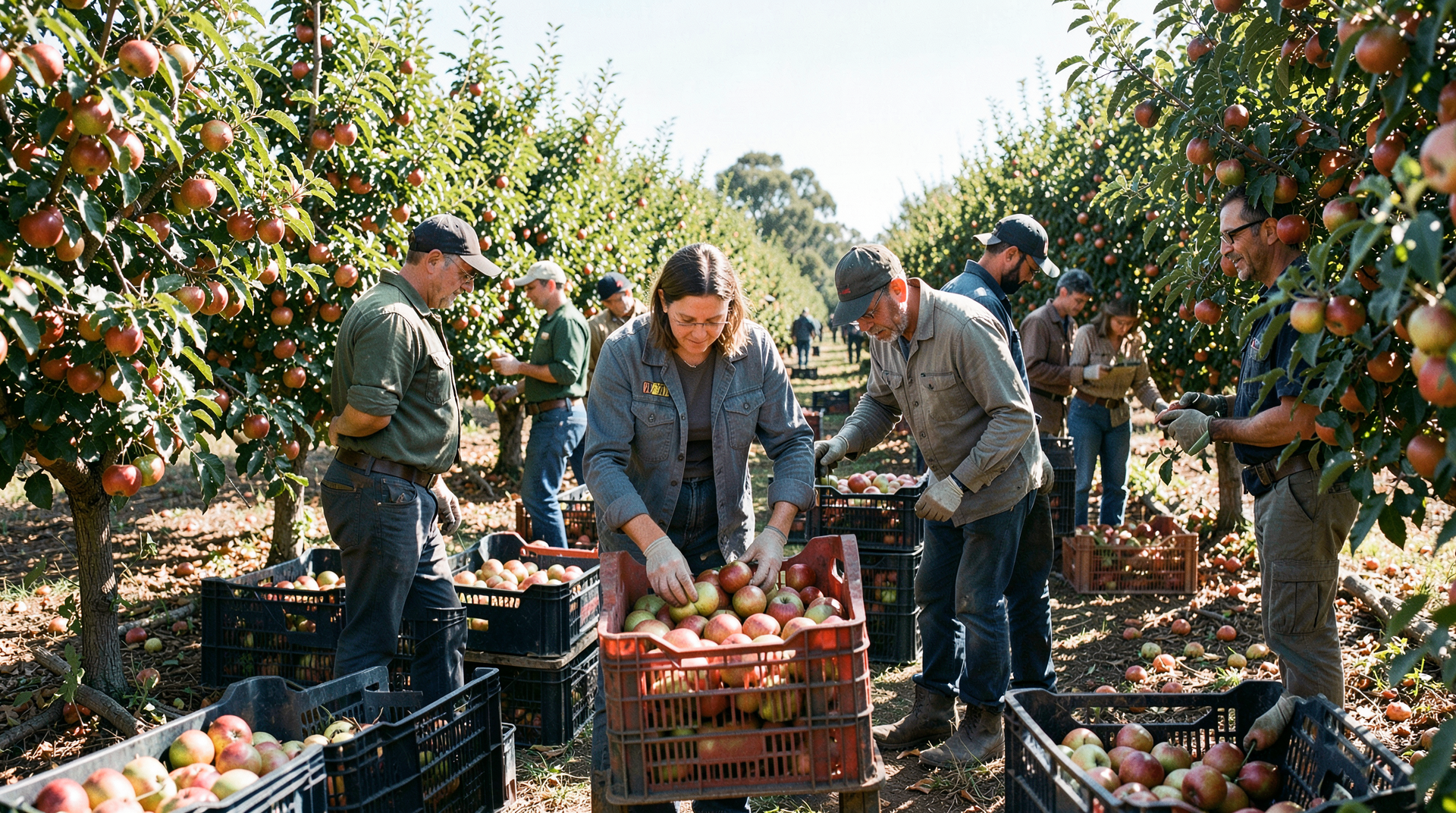
Australia offers seasonal horticultural work, including fruit picking, which can be an option for temporary migrants seeking to experience the country while earning an income. While opportunities exist, this work is often physically demanding, subject to weather conditions, and highly competitive, particularly for popular regions and crops. Understanding the specific visa pathways and realistic expectations is crucial before planning your journey.
At a Glance
- Typical salary: AUD $25 – $30 per hour (or piece rate equivalent)
- Visa route: Working Holiday (Subclass 417), Work and Holiday (Subclass 462), or Pacific Australia Labour Mobility (PALM) scheme
- Processing time: Days to several weeks (for Working Holiday visas); months (for PALM scheme)
- Top requirements: Age limits, nationality, sufficient funds, health requirements
Eligibility self-check
Quick self-check: is Australian seasonal work realistic for you?
This interactive self-check needs JavaScript. You can go straight to the official source instead: PALM scheme (official Australian Government site)
How Seasonal Work Visas Actually Work in Australia
Australia primarily offers two main pathways for foreigners seeking seasonal work like fruit picking: the Working Holiday Maker (WHM) program and the Pacific Australia Labour Mobility (PALM) scheme. The WHM program includes the Working Holiday (Subclass 417) and Work and Holiday (Subclass 462) visas, designed for young people from eligible countries.
These visas allow you to stay in Australia for 12 months and undertake short-term work, typically for up to 6 months with any one employer. Completing specific regional work, often in agriculture, can make you eligible for a second or even third WHM visa, extending your stay.
The PALM scheme, conversely, is a government-to-government initiative that connects Australian employers with workers from Pacific Island countries and Timor-Leste. This scheme is designed to fill labour shortages in various sectors, including agriculture, and provides longer-term work opportunities.
Visa processing times for Working Holiday visas can range from a few days to several weeks, depending on your nationality and the completeness of your application. PALM scheme applications are managed through approved employers and can take several months due to recruitment and administrative processes.
Working Holiday Maker (WHM) Program Costs and Expectations
The application fee for both the Working Holiday (Subclass 417) and Work and Holiday (Subclass 462) visas is currently AUD $635. You will also need to demonstrate access to sufficient funds, typically around AUD $5,000, to support yourself upon arrival in Australia.
This amount is intended to cover initial living expenses before you secure employment. Additionally, you may need to cover the cost of a return or onward ticket, or show evidence of funds to purchase one.
While these visas are popular, securing fruit picking work can be competitive, especially in peak seasons. Many workers travel to different regions following harvests, which requires flexibility and good planning.
Pacific Australia Labour Mobility (PALM) Scheme
The PALM scheme is a structured program where Australian employers recruit workers directly from participating countries. This means you do not apply for the visa directly; rather, an approved employer sponsors your visa application.
Under the PALM scheme, employers cover significant upfront costs, including international airfares and sometimes visa application fees. Workers under this scheme typically have guaranteed employment for the duration of their visa, which can be for several years.
Eligibility for the PALM scheme is restricted to citizens of specific Pacific Island nations and Timor-Leste. This pathway is not open to individuals from other countries.
Realistic Salaries for Fruit Picking in Australia
Earnings in Australian fruit picking jobs can vary significantly based on the crop, region, employer, and whether you are paid an hourly wage or a piece rate. Many farms pay a piece rate, meaning you are paid per bucket, bin, or tray picked.
While piece rates can allow motivated workers to earn more, they can also result in lower earnings on days with poor weather, low crop yield, or during your initial training period. It’s important to understand the pay structure before accepting a job.
| Role/Experience Level | Approximate Hourly/Piece Rate Equivalent |
|---|---|
| Entry-Level Picker (initial weeks) | AUD $23 – $27 per hour |
| Experienced Picker (efficient) | AUD $28 – $35+ per hour |
| Supervisor/Team Leader | AUD $30 – $40 per hour |
The Australian Government sets a minimum wage for casual agricultural workers, which must be met even if you are paid a piece rate. As of recent guidance, this is typically around AUD $28.26 per hour for casual employees.
It’s crucial to track your hours and output to ensure you are being paid correctly. Always clarify the payment terms before starting any work.
Requirements for Australian Seasonal Work Visas
The specific requirements depend on the visa pathway you pursue. For the Working Holiday Maker program, the core eligibility criteria include:
- Be aged between 18 and 30 years old (inclusive) at the time of application for most nationalities, or 18 to 35 years old for a select few.
- Hold a passport from an eligible country.
- Be outside Australia when you apply for your first Working Holiday visa.
- Not be accompanied by dependent children.
- Have sufficient funds for your initial stay and a departure ticket (typically AUD $5,000).
- Meet health and character requirements.
For the PALM scheme, the requirements are different as it is employer-sponsored:
- Be a citizen of an eligible Pacific Island country or Timor-Leste.
- Be selected by an approved Australian employer.
- Meet health and character requirements as determined by the Australian government.
- Have the necessary skills or willingness to be trained for the specific agricultural work.
Always refer to the official Australian Department of Home Affairs website for the most current and detailed eligibility criteria for each visa subclass.
How to Find Legitimate Roles via Official Channels
Finding legitimate fruit picking jobs requires diligence and focusing on official and reputable sources. Avoid any offers that seem too good to be true or ask for upfront payments.
For Working Holiday Makers (Subclass 417 & 462)
You are responsible for finding your own employment. While there isn’t one central government job board specifically for fruit picking, several avenues are reliable:
- Harvest Trail Information Service: This is a free service provided by the Australian Government, offering information on harvest seasons, locations, and contact details for growers. You can find this on the official Department of Agriculture, Fisheries and Forestry website.
- National Harvest Labour Information Service (NHLIS): This service provides a hotline and website with current harvest information and job vacancies.
- Job Search Websites: Mainstream job boards like Indeed Australia (au.indeed.com) and Seek (seek.com.au) often list agricultural positions. Search using keywords like “fruit picker,” “farm hand,” “harvest work,” and specify regions like “Queensland harvest” or “Victorian fruit picking.”
- Regional Employment Centres: Many rural areas have local employment services or backpacker job boards that can help connect you with local farms.
- Direct Contact with Farms: If you know which regions specialize in certain crops, you can often find farm websites and contact them directly.
Be prepared to travel to regional areas, as most fruit picking work is located outside major cities. Having your own transport can be a significant advantage in securing and maintaining work.
For PALM Scheme Workers
If you are eligible for the PALM scheme, you must apply through the approved processes in your home country. You cannot directly apply for a PALM visa. Your national government’s labour department will typically manage the recruitment process in collaboration with Australian employers.
Approved employers under the PALM scheme are listed on the official Department of Employment and Workplace Relations website. These employers are vetted and adhere to specific labour standards.
Step-by-Step Application Process (Working Holiday Maker)
The application process for a Working Holiday or Work and Holiday visa is generally straightforward and completed online:
- Check Eligibility: Confirm you meet all age, nationality, and other requirements on the Department of Home Affairs website.
- Gather Documents: Prepare your passport, bank statements (for proof of funds), and any other supporting documents.
- Apply Online: Submit your application through the official ImmiAccount portal on the Department of Home Affairs website. Pay the application fee.
- Health Checks (if required): Some applicants may need to undergo a medical examination or provide specific health information.
- Wait for Decision: Processing times vary, but you will be notified of the outcome via your ImmiAccount.
- Plan Your Arrival: Once your visa is granted, you can plan your travel to Australia. Remember to have your proof of funds readily accessible upon arrival.
Once in Australia, you can begin searching for fruit picking jobs using the legitimate channels mentioned above. For those interested in similar opportunities in other countries, exploring options like the UK warehouse jobs with sponsorship might also be relevant.

Frequently Asked Questions
How much money can I realistically save doing fruit picking?
Saving money depends heavily on your income, expenses, and lifestyle. While some individuals report significant savings, others find it challenging due to variable income and living costs. Budgeting carefully and choosing affordable accommodation are key factors.
Is fruit picking work physically demanding?
Yes, fruit picking is often very physically demanding. It involves long hours, working outdoors in various weather conditions (heat, rain), repetitive movements, and sometimes lifting heavy loads. A good level of fitness and stamina is essential.
Do I need previous experience to get a fruit picking job?
Generally, no. Most fruit picking jobs do not require prior experience, as employers often provide on-the-job training. A willingness to learn and a strong work ethic are usually more important.
Can I extend my stay in Australia through fruit picking?
Yes, for Working Holiday Maker visa holders. Completing specific regional work, including agricultural work, for a minimum of 3 months (88 days) can make you eligible for a second Working Holiday visa. Further work can lead to a third visa.
What is the best time of year to find fruit picking jobs?
Harvest seasons vary significantly by region and crop across Australia. Generally, the warmer months (spring to autumn, roughly September to May) offer the most opportunities. It’s advisable to research specific harvest calendars for the regions you plan to visit.
Warning: How to Spot Job Scams
The demand for seasonal work can attract fraudulent individuals and organisations. It is crucial to be vigilant and protect yourself from scams. Legitimate opportunities will never ask you for money to secure a job or a visa.
Be wary of unsolicited offers received via WhatsApp, Telegram, or social media. Legitimate employers and recruitment agencies use official channels and will not typically contact you out of the blue with guaranteed job offers.
Any request for upfront “visa fees,” “processing fees,” or “guaranteed placement fees” directly from you is a major red flag. Legitimate employers sponsoring visas, especially under schemes like PALM, cover these costs or clearly outline government fees payable directly to official immigration authorities.
Never share personal banking details or pay money to individuals claiming to be recruiters or employers for a job. Always verify the legitimacy of any company or individual by checking official government registers.
Conclusion
Seasonal fruit picking in Australia can be a viable option for those seeking a working holiday experience or, for eligible nationalities, through structured labour schemes. However, it requires careful planning, an understanding of visa requirements, and realistic expectations regarding the nature of the work and earnings.
Demand for these roles can be high, leading to competition, especially for popular harvest periods. Timelines for visa processing and job searching can vary, so patience and persistence are key. Always rely on official government websites and reputable job boards for accurate information and opportunities.
You May Also Like
- Canada Farm Jobs With Visa Sponsorship: TFWP and SAWP Explained
- Fully Funded Scholarships Abroad 2026: Major Programs and How to Apply
- Poland Factory Jobs for Foreigners: Work Permits, Agencies and Real Wages
- Cleaning Jobs Abroad With Visa Sponsorship: Which Countries Actually Hire
- Canada Hotel and Hospitality Jobs With Sponsorship: What Employers Really Offer