
Securing a warehouse job in the UK with visa sponsorship is possible, but it requires meeting specific criteria and understanding the genuine limitations of the immigration system. While demand exists, sponsorship is not universally available for all roles, and competition can be significant.
At a Glance
- Typical salary: £22,000 – £29,000 per year
- Visa route: Skilled Worker visa
- Processing time: 3 weeks to 3 months (after application submission)
- Top requirements: Job offer from a licensed sponsor, Certificate of Sponsorship, English language proficiency
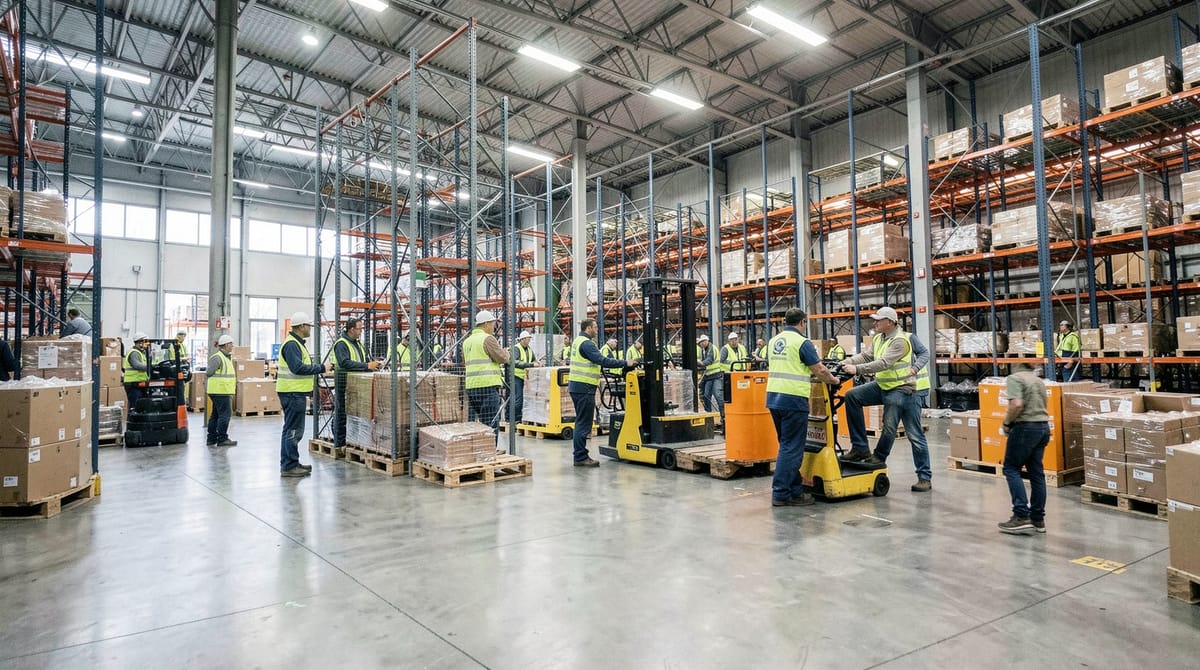
How UK Visa Sponsorship for Warehouse Roles Works
The primary route for most individuals seeking to work in UK warehouses with sponsorship is the Skilled Worker visa. This visa is designed for skilled workers coming to the UK to fill eligible job roles.
For a warehouse role to be eligible, it must be listed on the UK government’s list of eligible occupations for the Skilled Worker visa. As of recent guidance, certain logistics and warehouse roles, particularly those requiring specific skills or supervisory responsibilities, may qualify.
The employer must hold a valid sponsor licence from the Home Office to issue a Certificate of Sponsorship (CoS). A CoS is an electronic record, not a physical document, that contains your personal details and job information.
Obtaining a CoS is a crucial step; without it, you cannot apply for the Skilled Worker visa. The visa application process typically involves an online form, submission of supporting documents, and attendance at a visa application centre for biometrics.
Processing times can vary significantly but typically range from 3 weeks to 3 months after you submit your application. Priority services may be available for an additional fee to expedite this process.
Visa application fees are substantial. As of recent guidance, the Skilled Worker visa fee can range from approximately £719 to £1,500, depending on the length of stay. You will also need to pay the Immigration Health Surcharge (IHS), which is currently £1,035 per year for each applicant.
These fees are paid by the applicant, not usually by the employer. You must also demonstrate sufficient funds to support yourself when you arrive in the UK, typically around £1,270, unless your employer certifies your maintenance.
Realistic Salaries for UK Warehouse Jobs
Salaries for warehouse positions in the UK depend heavily on the specific role, your experience, location, and the size of the employer. Entry-level roles typically offer wages close to the National Living Wage.
The Skilled Worker visa also has minimum salary requirements. Your job must pay at least £29,000 per year or the ‘going rate’ for your specific occupation code, whichever is higher, as of recent changes. However, there are some exceptions, such as for roles on the Immigration Salary List (ISL) or for new entrants to the labour market, where a lower threshold may apply.
It is important to check the specific going rate for the relevant occupation code on the official UK government website. For example, a ‘Warehouse Operative’ might fall under a broader logistics category.
Here is an approximate range of typical gross annual salaries for various warehouse roles:
| Role / Experience Level | Approximate Annual Salary Range (GBP) |
|---|---|
| Entry-Level Warehouse Operative | £22,000 – £24,500 |
| Experienced Warehouse Operative (forklift certified) | £24,500 – £27,000 |
| Warehouse Team Leader / Supervisor | £27,000 – £32,000 |
| Logistics Coordinator / Planner | £28,000 – £35,000 |
These figures are gross salaries before tax, National Insurance, and other deductions. Your take-home pay will be lower.
Key Requirements for a Skilled Worker Visa
To be eligible for a Skilled Worker visa, you must meet several core requirements. These are set by the UK Home Office and are non-negotiable.
- Job Offer from a Licensed Sponsor: You must have a confirmed job offer from a UK employer who holds a valid sponsor licence. The job must be genuine and meet the eligibility criteria.
- Certificate of Sponsorship (CoS): Your sponsoring employer must issue you a Certificate of Sponsorship. This digital document links your visa application to their sponsorship licence.
- Eligible Occupation: Your job must be in an eligible occupation code listed by the Home Office. Not all warehouse roles qualify; typically, more skilled or specialized positions are eligible.
- Minimum Salary Threshold: Your salary must meet the general minimum threshold (currently £29,000 per year) or the specific ‘going rate’ for your occupation code, whichever is higher.
- English Language Proficiency: You must prove your knowledge of English. This can be done by passing an approved English language test at CEFR level B1, holding a degree taught in English, or being a national of a majority English-speaking country.
- Maintenance Funds: You must show you have enough money to support yourself in the UK, generally £1,270, unless your employer guarantees your maintenance on the CoS.
- Clean Criminal Record: You must provide a police certificate from any country you have lived in for 12 months or more over the last 10 years, demonstrating a clean criminal record.
It is crucial to gather all necessary documents before applying to avoid delays or refusal. This includes your passport, CoS reference number, evidence of English language ability, and proof of funds.
How to Find Legitimate Roles and Sponsors
Finding legitimate UK warehouse jobs with sponsorship requires a strategic approach using official and reputable channels. Avoid any offers that seem too good to be true.
Official Government Register of Licensed Sponsors
The most important tool is the official gov.uk Register of Licensed Sponsors. This public list contains every UK employer currently authorised by the Home Office to sponsor Skilled Worker visas. You can search this list by company name or location.
While the register doesn’t list specific job vacancies, it helps you identify companies that *can* sponsor. You can then visit their corporate websites or search their names on job boards for potential openings. If a company claims to offer sponsorship but isn’t on this list, it is likely a scam.
Mainstream Job Boards
Once you have identified potential sponsors, or sometimes even as a first step, you can search mainstream job boards. Websites like Indeed (uk.indeed.com) and Reed (reed.co.uk) are widely used in the UK.
When searching, use keywords such as “warehouse operative sponsorship,” “logistics visa sponsorship,” or “skilled worker visa warehouse.” Be aware that many listings may not explicitly mention sponsorship, as employers often prefer to assess candidates first.
If you find a promising role, check if the hiring company is on the licensed sponsor register. You can also look for roles that require skills more likely to qualify for sponsorship, such as forklift operators, inventory controllers, or warehouse supervisors, as discussed in guides like the one on Netherlands Logistics Jobs for Foreigners.
Company Careers Pages
Many large logistics firms, retailers with significant distribution networks, and e-commerce companies operate their own careers portals. These often list roles before they appear on general job boards.
Examples of companies to research include major supermarkets (Tesco, Sainsbury’s, ASDA), online retailers (Amazon, Ocado), and dedicated logistics providers (DHL, XPO Logistics, GXO Logistics). Always check their official websites directly.
Step-by-Step Application Process Through Official Channels
Navigating the application process can be complex, but following these steps will help you stay on track.
- Research Sponsoring Employers: Start by using the gov.uk register to identify companies that hold sponsor licences in the logistics or retail sector.
- Find Eligible Job Vacancies: Search the careers pages of these companies and reputable job boards (Indeed, Reed) for roles that align with your skills and meet the Skilled Worker visa salary and occupation code requirements.
- Apply for the Job: Submit your application directly to the employer through their official channels. Tailor your CV and cover letter to highlight relevant warehouse experience and any certifications (e.g., forklift licence).
- Secure a Job Offer and Certificate of Sponsorship (CoS): If successful, the employer will offer you the job and, importantly, issue you a Certificate of Sponsorship. This is a crucial step.
- Prepare Your Visa Application: Gather all required documents, including your CoS reference number, passport, proof of English language proficiency, maintenance funds, and any necessary police certificates.
- Complete the Online Visa Application: Submit your Skilled Worker visa application online via the official UK government website (gov.uk). You will pay the visa fee and the Immigration Health Surcharge at this stage.
- Attend a Biometric Appointment: You will need to attend a visa application centre to provide your fingerprints and a photograph.
- Receive a Decision: Wait for a decision on your visa application. This can take several weeks or months, depending on the service level chosen and the complexity of your application.
- Travel to the UK: Once your visa is approved, you can travel to the UK and begin your new role.
Throughout this process, always refer to the official UK government guidance on the Skilled Worker visa for the most up-to-date and accurate information.

Frequently Asked Questions
How long does the Skilled Worker visa last?
A Skilled Worker visa can be granted for up to 5 years. After this period, you may be eligible to apply to extend your visa or apply for indefinite leave to remain (settlement) if you meet the eligibility criteria.
Can my family join me on a Skilled Worker visa?
Yes, your partner and dependent children can usually apply to join you in the UK as your dependants. They will also need to pay visa fees and the Immigration Health Surcharge.
Do I need a university degree for warehouse jobs with sponsorship?
Generally, a university degree is not a requirement for most warehouse operative roles. However, roles like Logistics Coordinator or Warehouse Manager might benefit from higher education or significant industry experience. The key is that the role meets the skill level requirements set by the Home Office, not necessarily a degree.
What if my job isn’t on the Immigration Salary List (ISL)?
The Immigration Salary List (ISL) replaces the Shortage Occupation List (SOL). If your job is on the ISL, you might be able to be paid 80% of the usual going rate for the role and still qualify for a visa. If your job is not on the ISL, you must meet the general salary threshold or the full going rate for your occupation code.
Can I change employers after getting a Skilled Worker visa?
Yes, if you wish to change employers, your new employer must also be a licensed sponsor and issue you a new Certificate of Sponsorship. You will then need to make a new Skilled Worker visa application, which involves paying new fees.
Warning: How to Spot Job Scams
Unfortunately, immigration processes are often targeted by scammers. It is vital to be vigilant and protect yourself from fraudulent offers.
Be extremely wary of recruiters or individuals who contact you via WhatsApp, Telegram, or other unofficial messaging apps, especially if they claim to have guaranteed job offers or visas. Legitimate employers and recruiters use professional channels like email and official employment platforms.
A major red flag is any request for upfront payment of “visa fees,” “processing fees,” “guarantee fees,” or similar charges directly from you to secure a job or sponsorship. Legitimate UK employers will never ask job candidates to pay for their Certificate of Sponsorship or visa application fees. While you, the applicant, are responsible for paying the visa application fee and IHS to the Home Office, your employer should not charge you for their sponsorship services.
Promises of “guaranteed jobs” or “guaranteed visas” are also fraudulent. No one can guarantee a visa approval; this decision rests solely with the Home Office. Similarly, reputable employers do not guarantee jobs without a proper interview and selection process.
Always verify the legitimacy of any company claiming to offer sponsorship by checking if they are on the official gov.uk Register of Licensed Sponsors. If a company is not on this list, they cannot legally sponsor a Skilled Worker visa.
If you encounter suspicious offers, report them to the relevant authorities and cease all communication. Never share personal financial details or pay money to unverified sources.
Conclusion
The prospect of securing a warehouse job with visa sponsorship in the UK in 2026 is a real opportunity for many, particularly for roles that meet the skill and salary thresholds. However, it demands careful research, adherence to official channels, and a realistic understanding of the process.
Demand for logistics professionals remains high, but competition for sponsored roles is also significant. The application timelines can be lengthy, and the associated costs are substantial. By focusing on legitimate employers and following official guidance, you can navigate this path effectively.
You May Also Like
- Canada Farm Jobs With Visa Sponsorship: TFWP and SAWP Explained
- Fully Funded Scholarships Abroad 2026: Major Programs and How to Apply
- Poland Factory Jobs for Foreigners: Work Permits, Agencies and Real Wages
- Cleaning Jobs Abroad With Visa Sponsorship: Which Countries Actually Hire
- Canada Hotel and Hospitality Jobs With Sponsorship: What Employers Really Offer